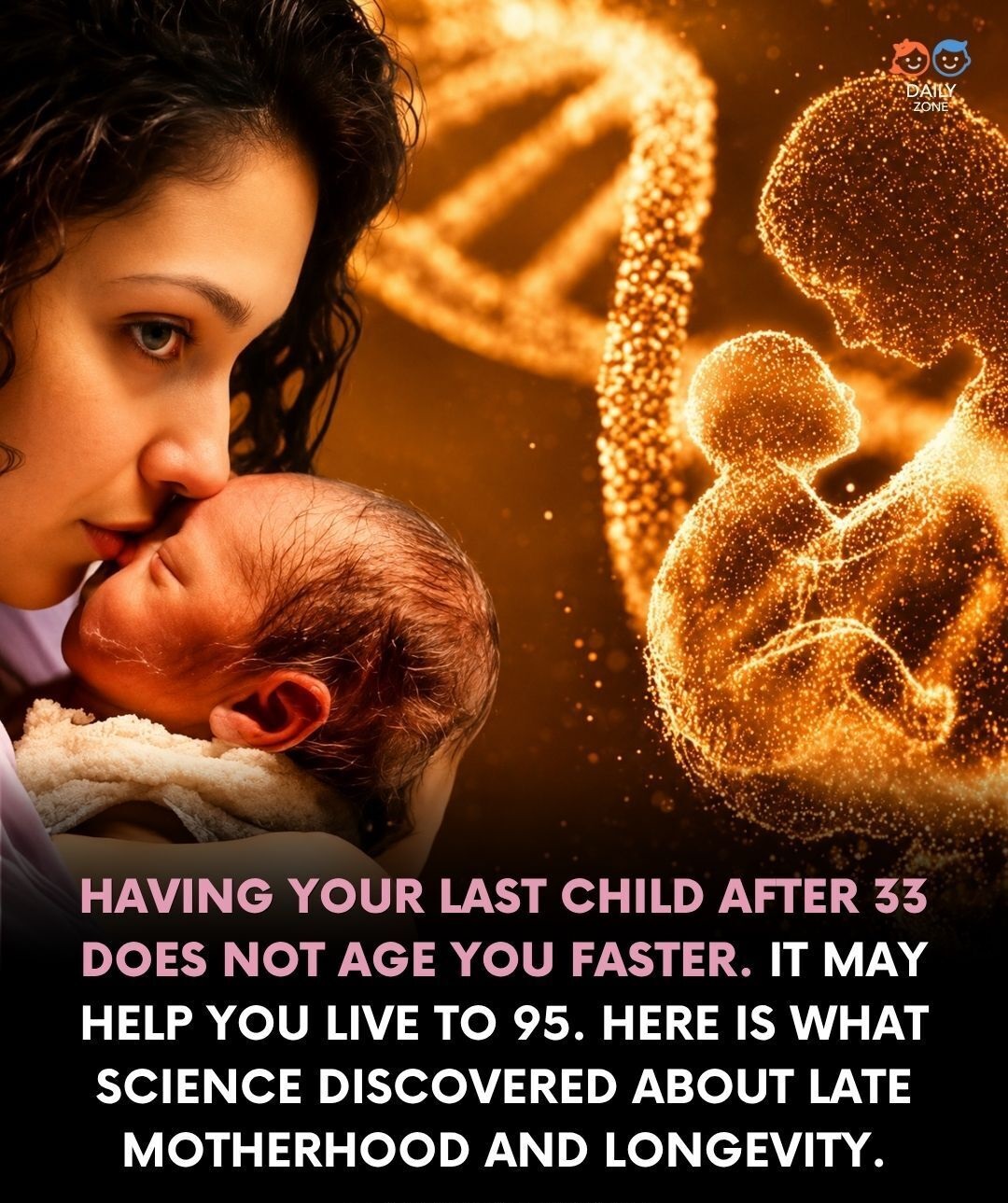
Most people assume that having children later in life comes with certain trade-offs. Society often talks about the “biological clock” and the challenges of motherhood after 30. But new research is turning that common belief upside down. It turns out that women who have their last child after age 33 may actually have a significantly higher chance of living to 95 or beyond.
What the Research Found
Scientists tracked thousands of women over many years and made a fascinating discovery. Those who gave birth to their last child after the age of 33 had noticeably longer telomeres — the protective caps at the ends of chromosomes that are closely linked to how fast our bodies age.
Longer telomeres are associated with slower cellular aging, lower risk of many diseases, and overall increased lifespan. The difference was not small. This finding suggests that later motherhood may actually be connected to better long-term health and longevity.
Understanding Telomeres and Why They Matter
Telomeres act like the plastic tips on the ends of shoelaces. They protect our DNA from damage during cell division. Over time, telomeres naturally shorten, which is part of the aging process. When they become too short, cells stop dividing properly, leading to aging and disease.
The research showed that women who had their last child later in life tended to have longer telomeres. This biological advantage appears to be connected to the hormonal changes that occur during pregnancy, even at a later age. These changes may help protect and even lengthen telomeres, slowing down the aging process.
Why This Challenges Common Beliefs
For decades, the message has been that a woman’s fertility and health decline sharply after 30. While it is true that fertility decreases with age, this new evidence shows that the story is more nuanced. Later pregnancy doesn’t necessarily mean faster aging — in some cases, it may actually be linked to slower aging and greater longevity.
This doesn’t mean every woman should delay having children. Pregnancy at any age comes with its own considerations, and individual health factors vary greatly. But it does challenge the idea that a woman’s body is “past its prime” after a certain age. In fact, for some women, the biology of later motherhood may offer protective benefits.
What This Means for Women Today
This research offers a more hopeful and balanced view of women’s reproductive years. It suggests that the decision about when to have children is deeply personal and should be based on individual circumstances, support systems, and health rather than fear of aging alone.
It also highlights how powerful pregnancy and the associated hormonal environment can be for a woman’s long-term health. The body appears to respond in ways that support cellular health and longevity, even later in the reproductive window.
The Final Reveal: Women who have their last child after age 33 tend to have significantly longer telomeres, which are linked to slower biological aging and a much higher chance of living to 95 or beyond. The hormonal environment of later pregnancy appears to offer protective benefits that may contribute to greater longevity. This finding challenges the common narrative of decline after 30 and shows that, for many women, later motherhood may actually be connected to better long-term health outcomes.
A More Balanced Perspective on Motherhood and Aging
This study doesn’t mean delaying pregnancy is right for everyone. Fertility, health risks, and personal circumstances are all important factors to discuss with a doctor. But it does provide reassuring evidence that a woman’s body is more resilient and adaptable than many people assume.
It also encourages a more positive conversation about women’s health across all stages of life. Rather than focusing only on risks, we can also recognize the potential strengths and protective effects that come with different life choices.
Every woman’s journey is unique. Whether you choose to have children earlier, later, or not at all, the most important thing is making informed decisions that feel right for you and your health.
This research adds an important piece to the bigger picture of women’s wellness and longevity. It reminds us that biology is complex, individual, and often full of surprises — many of them positive.
This is a popular health and longevity topic originally shared and discussed across various internet communities and forums.
Disclaimer: Our website is designed for informational and entertainment purposes only. We are not a real estate company and do not engage in selling, listing, or brokering properties. We operate as a blog, curating and sharing interesting houses we find on various websites across the internet. All decisions related to real estate should be made in consultation with licensed professionals. We do not guarantee the accuracy or timeliness of the information provided. Use our content at your own discretion and risk.