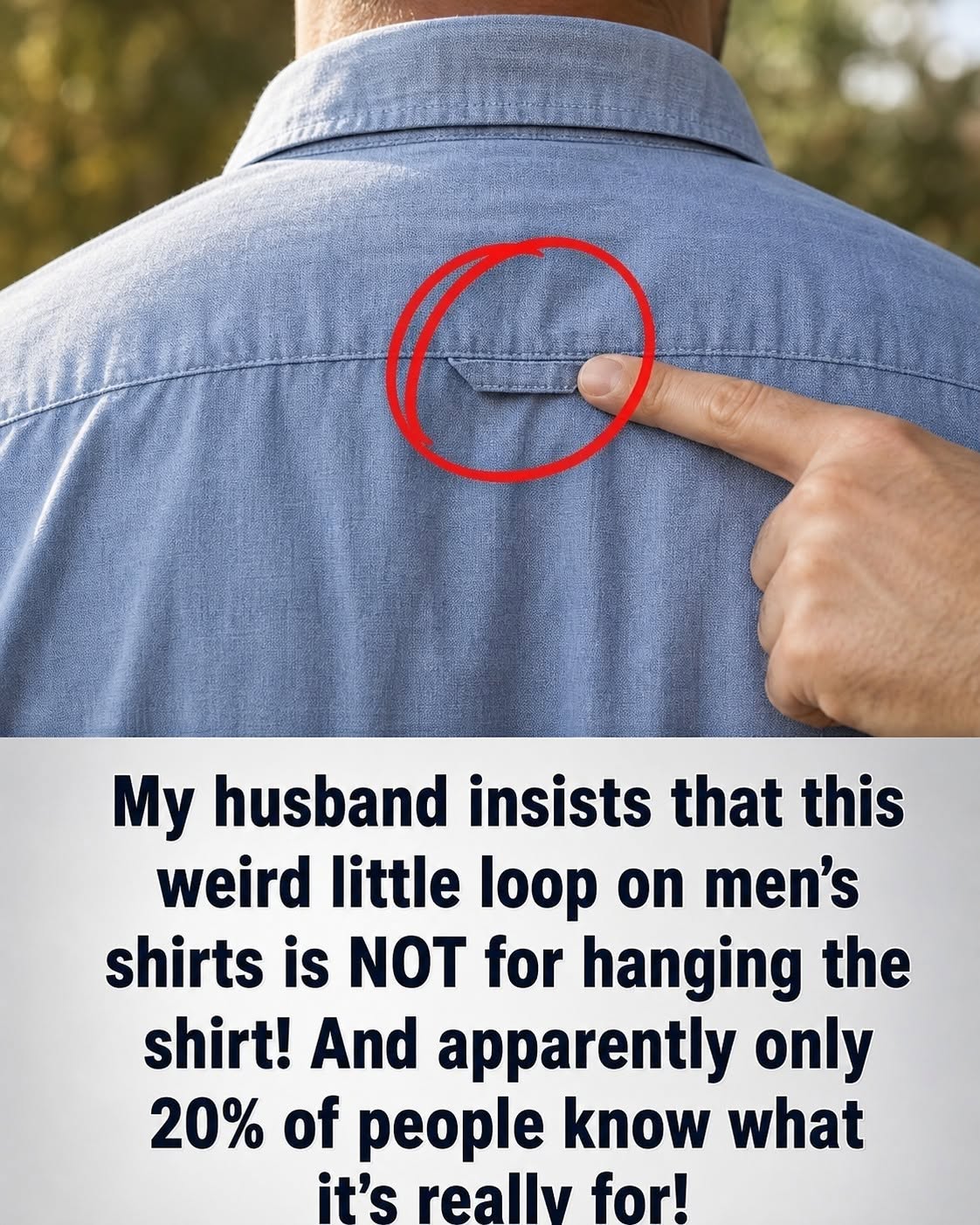
Take a quick look through your closet today and pull out a few of your favorite dress shirts. Turn one of them around and look right below the back of the collar, where the shoulders meet the center fabric pleat. You will probably spot a tiny, unassuming fabric loop securely stitched right into the seam.
Most of us have noticed this little detail at some point while ironing or folding laundry, but we rarely give it a second thought. You might assume it’s just a decorative touch, a quirky manufacturing leftover, or a guide for tailors. However, this tiny piece of fabric has an incredibly rich, practical history.
So, what is the loop on the back of a shirt for, where did it come from, and why is it still featured on high-quality button-downs today? Let’s unravel the fascinating story behind this classic style staple.
The Salty Origins of the “Locker Loop”
To understand why this loop exists, we have to travel back to the early 1900s. Long before the era of fast fashion, clothing was built strictly for function. Every single button, seam, and stitch had to serve a real purpose—especially for the men serving in the United States Navy.
Life on a naval battleship was incredibly cramped. Space was a luxury that simply didn’t exist below deck. Sailors didn’t have spacious walk-in closets, wooden hangers, or dressers. Yet, strict naval regulations demanded that their dress uniforms remain clean, dry, and perfectly wrinkle-free.
To solve this storage headache, clever shirt makers added a heavy-duty, reinforced fabric loop to the back of the shirt collar. Sailors could easily hang their garments directly onto the sturdy metal wall hooks scattered around the ship’s quarters. This kept the shirts off the damp floors, allowed the fabric to air out, and maintained a crisp shape without an ironing board. The feature quickly earned its official name: the locker loop shirt style.
From the High Seas to Ivy League Style
After World War II, millions of military veterans returned home, bringing their durable uniforms into civilian life. Clothing manufacturers noticed how much these men loved the practical elements of military gear. When factories shifted back to making everyday consumer goods, designers kept the loop on standard men’s button-down shirts.
By the late 1950s and 1960s, the locker loop evolved from a military survival tool into a massive American fashion statement, largely thanks to a brand called Gant.
Gant began manufacturing premium oxford shirts featuring the prominent loop and marketed them heavily to East Coast university students. Young men at Harvard and Yale absolutely loved the look, adopting the button-down shirt loop as an essential badge of the iconic, high-end “preppy” uniform.
| Era | Primary Purpose of the Loop | Cultural Meaning |
|---|---|---|
| Early 1900s | Hanging uniforms on naval battleship hooks | Pure military utility and space-saving |
| 1960s Ivy League | Dorm room storage and campus culture | A status symbol of high-quality tailoring |
| Modern Day | Wrinkle-free travel, gym lockers, and heritage style | A signature sign of premium garment craftsmanship |
Young Love and Ripped Shirts: The Dating Lore
As the locker loop dominated college campuses, it picked up a legendary piece of American folklore. During the 1960s, the loop actually became an interactive part of the high school and college dating scene!
According to campus tradition, a young man would leave the fabric loop completely intact if he was single and playing the field. However, if he started “going steady” with a girlfriend, he would carefully snip or rip the loop off the back of his shirt. Removing the loop was a public declaration that he was officially off the market.
This trend led to plenty of playful mischief in school hallways. Girls would often sneak up behind a boy they had a crush on and try to yank the loop right off his collar. To prevent their expensive clothes from getting ruined by an unexpected tug, many guys simply cut the loops off themselves the moment they bought a new shirt!
💡 4 Ways the Locker Loop Is Still Shockingly Useful Today
We may not be sailing the rough seas or worrying about 1960s high school dating rules, but these hidden fashion features are still incredibly handy:
- Wrinkle-Free Hotel Travel: If your hotel room runs out of clothes hangers, simply hang your button-down by the loop on a bathroom door hook or doorknob to keep it wrinkle-free.
- Gym & Pool Lockers: Gym lockers are notoriously narrow. Hanging your shirt by the loop keeps it safely off the damp floor and prevents it from getting crushed in your gym bag.
- Flawless Air Drying: If you prefer to air-dry your high-quality cotton clothes, hang the shirt directly on a clothesline hook using the loop. It dries beautifully without the awkward “shoulder bumps” left behind by wire hangers.
- Quick Office Storage: Need to shed a layer while working? You can hang your shirt up on any cubicle or coat hook without warping the collar.
The Modern Mark of Premium Craftsmanship
Next time you are clothes shopping, check the back of the collar. You might notice that many budget-friendly, fast-fashion brands don’t include the loop anymore. To save a few pennies on manufacturing costs, many mass-production factories cut out these extra design details entirely.
Because of this, finding a locker loop on a modern shirt is usually an excellent indicator of a garment’s overall quality. Heritage fashion brands that take immense pride in traditional tailoring continue to include the loop as a proud nod to authentic American craftsmanship.
It is a wonderful reminder that the best design details are built to last. A simple fabric strip invented to help sailors over a century ago survived world wars, massive fashion shifts, and generations of home cooks and workers. So, the next time you get dressed for a special occasion, look at the back of your collar—you’re wearing a little piece of history!
Disclaimer: Our website is designed for informational and entertainment purposes only. We are not a real estate company and do not engage in selling, listing, or brokering properties. We operate as a blog, curating and sharing interesting houses we find on various websites across the internet. All decisions related to real estate should be made in consultation with licensed professionals. We do not guarantee the accuracy or timeliness of the information provided. Use our content at your own discretion and risk.