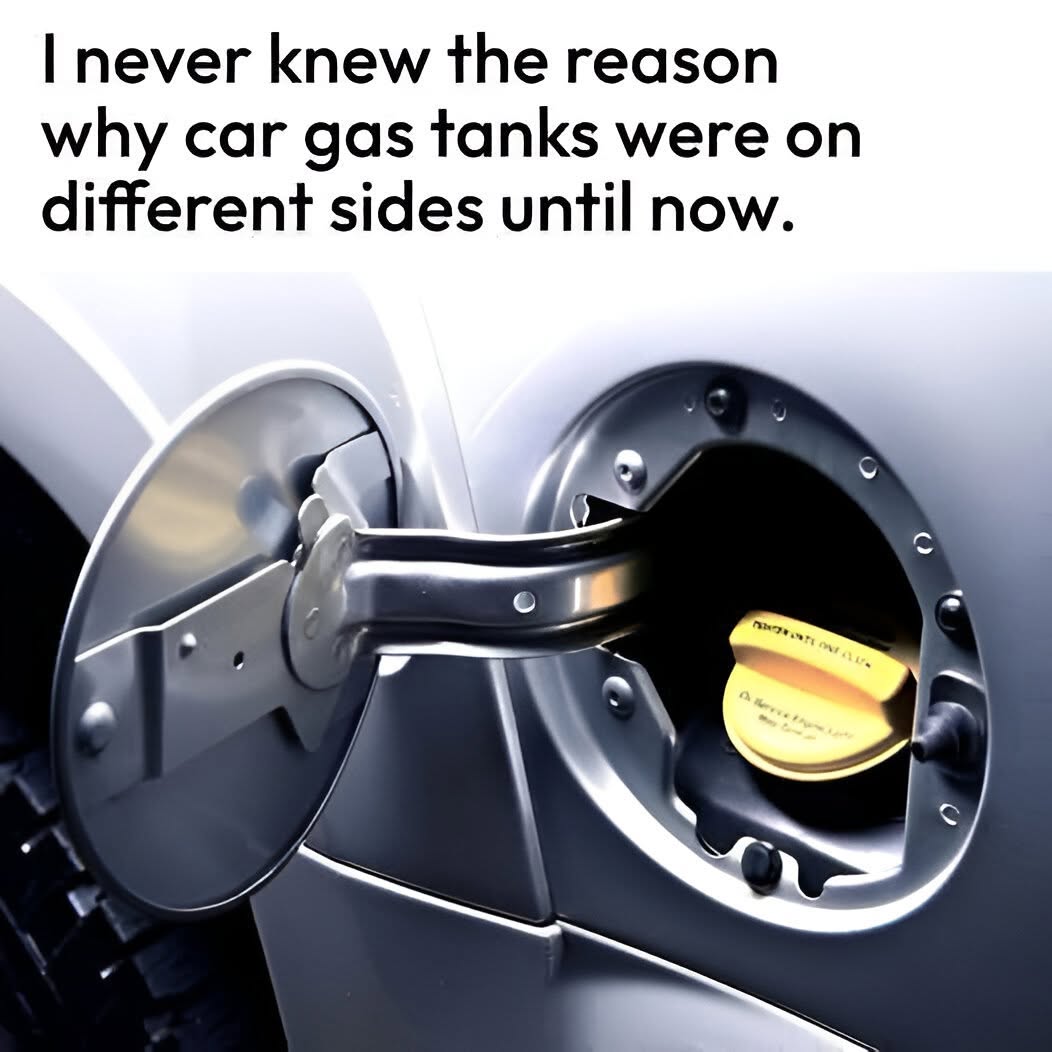
We’ve all been there. You pull up to the pump after a long drive, maybe with the grandkids in the back or groceries to get home, and you realize you’ve chosen the wrong side. Out you hop, only to do that little shuffle back into the car while hoping no one notices. It happens to the best of us, and it always leaves you wondering — why can’t they just pick one side?
As someone who’s spent plenty of years behind the wheel, running errands and taking family road trips, I started looking into this. What I found is that it’s not random at all. Car makers have thoughtful reasons for placing the gas filler where they do. Understanding it takes away some of the frustration and gives us a little more appreciation for the engineering that goes into our vehicles.
It’s About Balance and Making the Car Handle Well
One of the biggest factors is something called weight distribution. Engineers work hard to make sure a car feels stable and safe on the road. The engine sits on one side, along with lots of other heavy parts, so the fuel tank often goes on the opposite side to help keep things balanced.
This matters more than you might think, especially as we get older and value a smooth, comfortable ride. A well-balanced car handles turns better, stops more predictably, and just feels more secure when you’re driving through rain or around curves on those familiar back roads.
Space Under the Car Matters Too
Modern cars are packed with all sorts of components — exhaust systems, wiring, suspension parts, and more. It’s like trying to organize a crowded toolbox. The fuel tank and its filler tube need to fit where there’s room without interfering with everything else.
That practical puzzle often decides the final location. It’s a reminder of how much careful planning goes into even the everyday parts of our cars.
Safety Comes First in Every Design Choice
Car manufacturers also think a lot about what happens in an accident. They position the fuel tank and filler away from areas most likely to take a hard hit in a rear-end collision. The goal is to keep the fuel system as protected as possible so we can avoid dangerous situations.
Many companies also place the filler on the passenger side in right-hand drive countries. That way, if you ever have to pull over on the shoulder, you’re standing farther from traffic while filling up. It’s a small detail that shows how designers keep our safety in mind, especially for those of us who do a lot of highway driving or travel with family.
How the Factory Line Plays a Role
Here’s something I found particularly interesting. Sometimes the decision comes down to what works best on the assembly line. If placing the tank on one side saves a few seconds per car or makes the manufacturing process smoother, that choice can stick across thousands of vehicles.
It’s not that they’re ignoring us drivers — it’s just that building cars efficiently helps keep costs down for everyone. Over the years, these small production choices add up and shape the cars we end up driving.
Driver Convenience Does Get Considered
In some models, you’ll find the filler on the driver’s side because it really is handier. You step out and it’s right there — no stretching the hose across the car. But this seems to be more of a bonus than the main goal. Different brands have their own approaches, which is why we see so much variety.
What About Countries Where They Drive on the Other Side?
You might think cars in places like the UK or Australia would always have the filler on the opposite side to match their driving habits. Sometimes they do, but not always. Many vehicles are built on global platforms, so the same basic design gets used in different markets with only necessary changes.
If you’ve ever rented a car while traveling or borrowed one from out of town, you know how that can lead to a few extra steps at the pump. It’s all part of how the world of automobiles works across borders.
The Little Arrow That Saves the Day
Here’s one of my favorite discoveries — that tiny arrow next to the gas pump symbol on your dashboard. It points to the side where your fuel filler is located. Such a simple thing, yet incredibly helpful, especially with rental cars or when different family members drive different vehicles.
The idea came from a thoughtful designer at Ford back in the 1980s who got tired of guessing. Now it’s standard in almost every car, quietly making our lives easier. Next time you’re at the pump, take a quick glance — it might just prevent that awkward moment.
Other Little Car Mysteries We’ve Learned to Live With
While we’re talking about these everyday frustrations, there are plenty of other small car features that make more sense once you know their stories. That extra seatbelt buckle you never use? It’s often there for child seats or to remind you to buckle up properly.
These details show how much thought goes into the vehicles that carry us and our loved ones safely from place to place. As we get older, appreciating these little bits of engineering can make driving feel more like a partnership with the car rather than a guessing game.
Why This All Matters More Than You Might Think
Our cars are more than just transportation. For many of us, they’re how we visit family, run important errands, or enjoy a peaceful drive on a sunny afternoon. Knowing why things are designed the way they are helps us feel a bit more connected to the machines we rely on.
Next time you find yourself on the wrong side of the pump, smile and remember it’s not you — it’s the result of years of engineering decisions made with balance, safety, and practicality in mind. And don’t forget to check that little arrow. It’s there to help folks just like us.
Have you ever had one of those funny gas station moments? Or noticed something else about your car that left you wondering? Share in the comments — we’d love to hear your stories and maybe learn a thing or two together.
After all, there’s comfort in knowing we’re all figuring these things out as we go, one tank of gas at a time.
Disclaimer: Our website is designed for informational and entertainment purposes only. We are not a real estate company and do not engage in selling, listing, or brokering properties. We operate as a blog, curating and sharing interesting houses we find on various websites across the internet. All decisions related to real estate should be made in consultation with licensed professionals. We do not guarantee the accuracy or timeliness of the information provided. Use our content at your own discretion and risk.