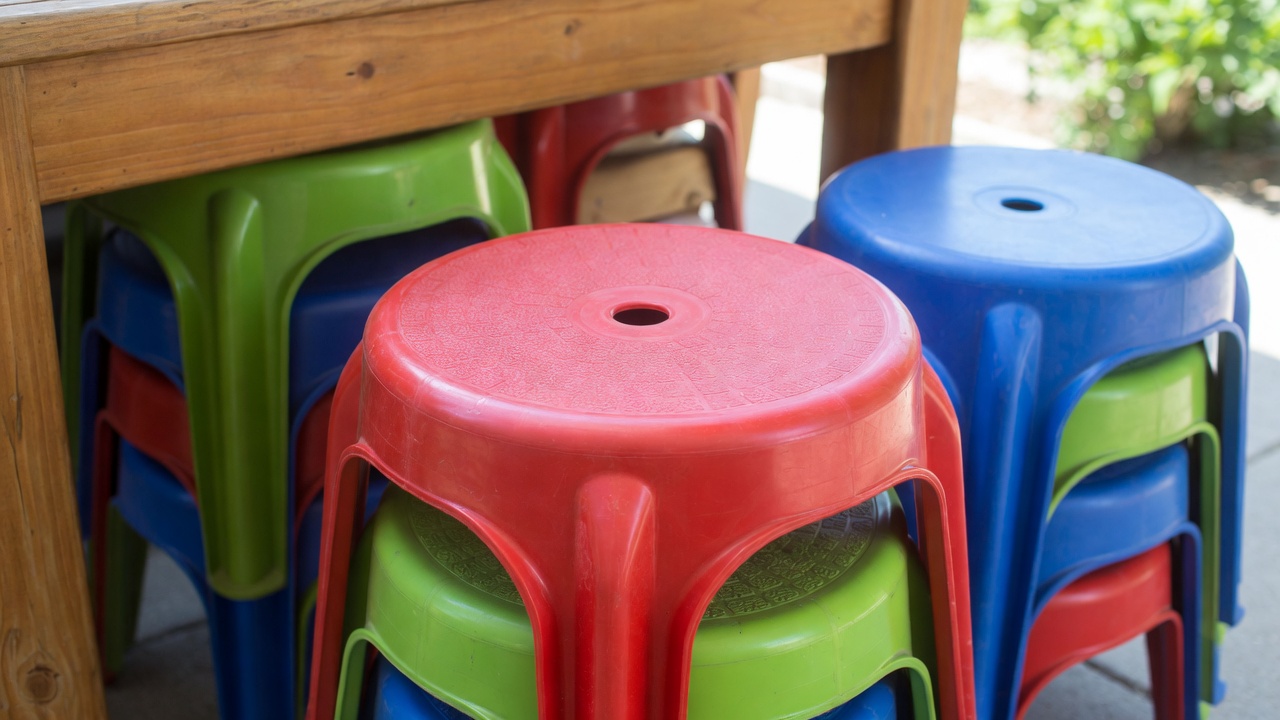
Ever notice that little round hole smack in the center of those classic plastic stools? You know the ones — the cheap, stackable kind you find everywhere from backyard barbecues to street food stalls and your aunt’s kitchen. It’s been staring back at us for decades, but most people never stop to wonder: what’s the deal with that hole?
I’ve sat on these stools my whole life and finally decided to dig into it. Turns out, it’s not some random design mistake or factory leftover. That hole is actually pretty clever engineering. Let’s break it down in plain English — no fluff, just the real reasons why it exists and why it matters.
The Stacking Secret: No More Stuck Stools
Picture this: you’re at a wedding or a big family gathering and someone stacks 20 plastic stools on top of each other. Without that center hole, you’d be in trouble. Those smooth plastic surfaces create a vacuum seal when pressed together. Try pulling one off and you’re basically playing Jenga with furniture.
The hole breaks that suction. Air flows through, making it super easy to separate the stools without yanking your back out. It’s simple physics doing the heavy lifting. Manufacturers figured this out years ago, and it’s one of the main reasons these stools stack so neatly and come apart so smoothly.
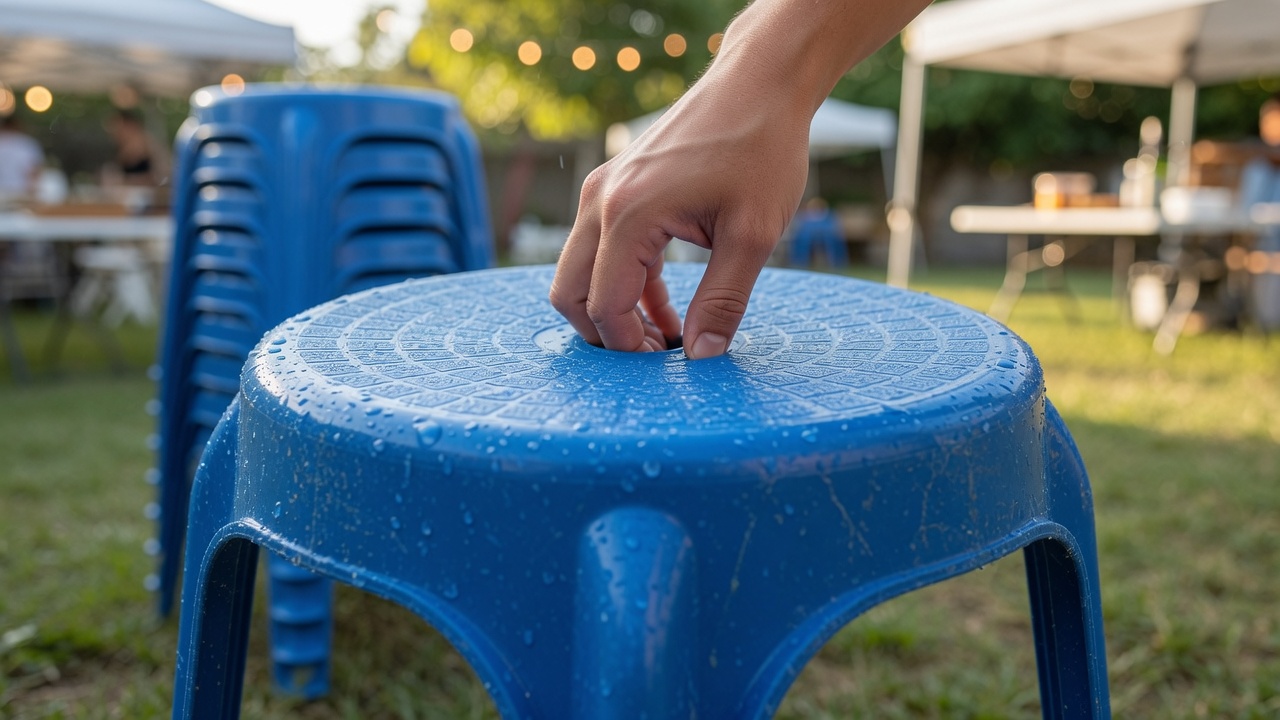
Bonus practical tip: that same hole doubles as a built-in handle. Just stick your finger in and lift. No need to grab the edges or risk pinching your hands. Next time you’re moving a bunch of them around the yard, you’ll thank that little circle.
Drainage That Actually Works
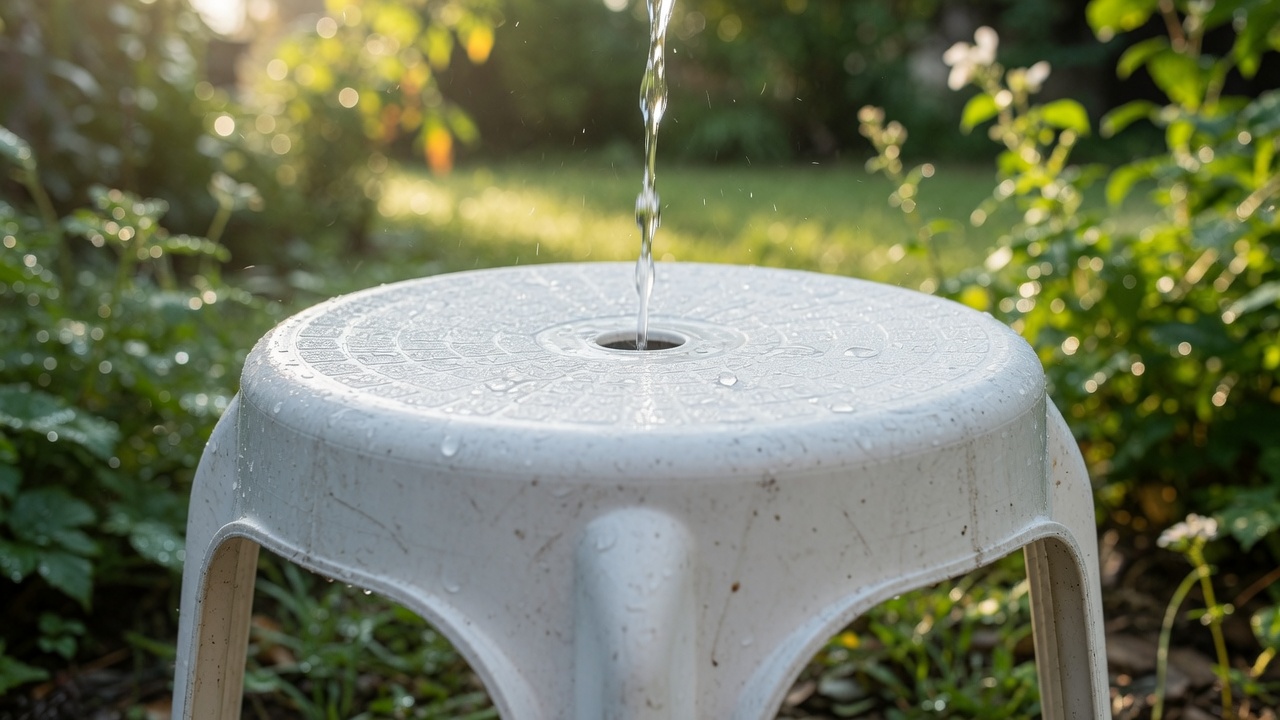
Leave a plastic stool outside overnight and it rains — what happens? Without a hole, the seat turns into a little puddle collector. Nobody wants to sit in a pool of rainwater. That center hole lets water drain straight through so the surface dries fast.
This is a lifesaver in outdoor settings like food stalls, patios, or open-air markets. Vendors hose down the area after a busy day, and the hole helps everything dry quicker instead of turning the stool into a slippery mess. It’s one of those small details that makes these stools perfect for real-life, messy use.
I’ve seen this in action at roadside tea shops and beachside spots. You sit down after a quick rain and the seat is already dry. Little things like this are why these stools have become everyday heroes in so many parts of the world.
Smarter Manufacturing and Less Material Waste
Here’s where it gets interesting from an engineering side. These stools are usually made with injection molding — hot plastic gets shot into a mold. The middle section is thicker, so it takes longer to cool. That hole helps the plastic cool faster and more evenly, speeding up production.
It also saves material. Every gram counts when you’re making millions of stools. Removing that small circle of plastic cuts down on cost, weight, and even the environmental impact a tiny bit. It’s efficient design at its best — like the minimalist approach you see in good, practical products.
Because of this, manufacturers can produce them cheaper and faster, which is why they’re so affordable and everywhere. That hole isn’t just useful after you buy it — it’s helping from the moment the plastic is poured.
Lightweight Strength Without Sacrificing Durability
Plastic stools need to be light enough to carry around but strong enough to hold adults all day long. The hole helps strike that balance. Less material in the center means less weight overall, but the design keeps the strength where it matters — around the edges and legs.
It’s a smart way to optimize without making the stool feel flimsy. You get portability for stacking and moving, but it still feels solid when you sit down. That’s why you see them used in schools, events, homes, and street vendors across so many countries.
Over the years, slight variations have popped up — some holes are perfectly round, others a bit more decorative — but the core purpose stays the same. It’s proof that good design doesn’t need to be complicated.
Fun Moments and Everyday Conversations
Let’s be honest — that hole is also a magnet for mischief. Kids love poking their fingers through it. Adults do too when they’re bored. It becomes an icebreaker at parties: “Hey, why is there a hole here anyway?” Now you can drop some real knowledge instead of shrugging.
I’ve caught myself explaining this to friends more than once. It turns an ordinary stool into a conversation starter. And once you notice it, you can’t stop seeing it everywhere — from your parents’ house to random roadside spots.
Why Small Design Details Matter
The hole in a plastic stool is a perfect example of thoughtful design. What looks like a pointless feature actually solves real problems: stacking, drainage, manufacturing efficiency, weight, and even everyday handling.
In a world full of overcomplicated gadgets, it’s refreshing to see something so simple do so much. These stools might not be fancy, but they’re reliable, practical, and surprisingly well-thought-out.
Next time you grab one for a backyard hangout or sit at a street stall, take a second to appreciate that little hole. It’s quietly doing its job, making life just a little bit easier. Life is full of these overlooked details — the things that seem small but actually hold everything together.
Have you ever wondered about other everyday objects like this? Drop a comment below and let me know what mystery we should tackle next!
Word count: ~920
Disclaimer: Our website is designed for informational and entertainment purposes only. We are not a real estate company and do not engage in selling, listing, or brokering properties. We operate as a blog, curating and sharing interesting houses we find on various websites across the internet. All decisions related to real estate should be made in consultation with licensed professionals. We do not guarantee the accuracy or timeliness of the information provided. Use our content at your own discretion and risk.