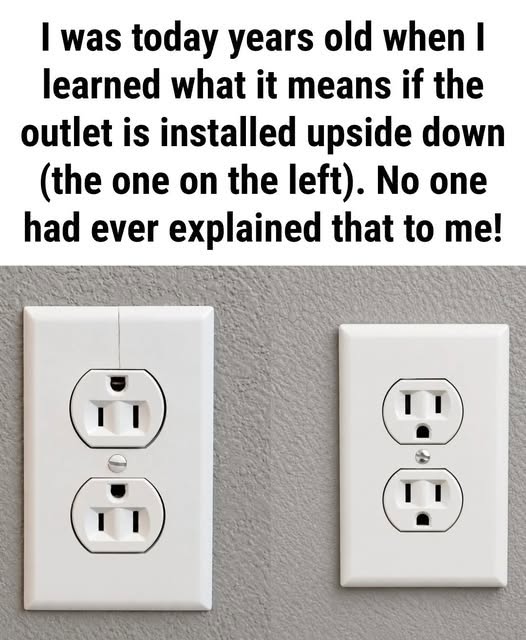
You’re tidying up the living room or rearranging furniture in the bedroom when an electrical outlet catches your eye. Something looks off. The grounding hole—the little round “mouth” of the outlet—is sitting on top instead of the bottom. It looks like a little face turned completely on its head.
Naturally, many homeowners assume the builder made a sloppy wiring mistake. But in most cases, that outlet upside down layout was done completely on purpose.
If you live in an older home, these flipped plugs can spark a bit of curiosity or even mild concern. The great news is that this setup usually serves a highly practical purpose, deeply tied to how your room was originally wired. Let’s pull back the cover plate and look at exactly why are some outlets upside down, what it means for your home, and how to work with them safely.
What an Upside-Down Outlet Usually Means
In the vast majority of residential homes, an upside-down outlet acts as a simple, instant visual signal. It tells you that you are looking at a switched outlet. This means a standard wall switch by the door controls the power to part or all of that specific plug.
Builders frequently used this clever setup in rooms designed without a built-in ceiling light fixture. Instead of running expensive overhead wiring, they wired a specific wall plug to connect directly to the wall switch. When you walk into the dark room, you flip the switch, and your favorite table lamp or floor lamp instantly turns on.
Typically, only one half of the outlet responds to the switch. Usually, the top or bottom plug stays “always-on” so you can plug in a clock radio, TV, or phone charger without losing power. The other half cuts power with the flip of the switch to control your lighting. It turns a standard plug into a highly convenient remote control for your lamps.
Why Flipped Outlets Act as a Helpful Visual Cue
When an electrician installs an outlet upside down, it stands out immediately. Homeowners, inspectors, and future home buyers can spot it from across the room because it breaks the pattern of every other standard plug.
This simple visual cue saves you tons of time and guesswork. Instead of walking around a new house testing every single plug with a lamp to find out which one controls the lighting, you just look for the flipped one. It’s one of those tiny, thoughtful construction details that makes navigating an older home much easier.
Is There a National Rule for Outlet Orientation?
Let’s clear up a major myth: **there is no nationwide electrical code rule** dictating which way an outlet must face in a standard home. The National Electrical Code (NEC) focuses heavily on safety, proper grounding, and secure wire connections, but it remains completely silent on whether the grounding hole should be on the top or the bottom.
Whether an outlet is installed ground-up or ground-down typically comes down to:
- The personal preference of the original electrician.
- Local city building traditions and historical practices.
- A previous DIY homeowner replacing a broken outlet out of habit.
Because there is no universal law, a flipped outlet is a fantastic clue, but it is never a 100% guarantee. You should always run a quick test before assuming how it behaves.
| Outlet Orientation | Common Residential Meaning | Where You See It Most |
|---|---|---|
| Ground Hole on Bottom | Standard, always-on residential power | Living rooms, kitchens, bedrooms |
| Ground Hole on Top | Switched outlet (controlled by wall switch) | Older homes, bedrooms without ceiling lights |
| Ground on Top (Commercial) | Heavy duty safety standard | Hospitals, schools, commercial offices |
The Safety Secret: Why Electricians Choose “Ground Up”
While homeowners are used to seeing the ground pin at the bottom, look closely next time you visit a hospital, school, or corporate office. In commercial spaces, you will find almost every single electrical outlet ground up or down question answered with the ground pin firmly on top. This is called a “ground-up” installation, and it exists for a brilliant safety reason.
Picture a loose plug that has slipped slightly out of the wall, exposing the hot metal prongs. If a thin metal object—like a paperclip, a stray coin, or a piece of jewelry—slips down the wall, what happens?
If the ground pin is on the bottom, the object falls directly onto the live hot and neutral prongs, creating an instant electrical short, dangerous sparks, or a fire. But if the ground pin is on top, the falling object hits the harmless, uncharged grounding pin first, bouncing safely away without creating an electrical arc.
🔌 How to Safely Test a Switched Outlet in 2 Minutes
You don’t need expensive tools or advanced electrical knowledge to map out your room. All it takes is a standard lamp:
- Plug a working, turned-on lamp into the top half of the upside-down outlet.
- Walk over to the wall switch by the door and flip it back and forth.
- If the lamp turns on and off, you’ve found your switched plug!
- Move the lamp to the bottom half and repeat the test to see if it stays always-on.
Pro Tip: If the lamp doesn’t respond, the switch might control a completely different outlet in the room, or a previous owner may have replaced the outlet and forgotten to clip the brass tab that separates the two halves!
Practical Tips for Living with Switched Outlets
Once you figure out the layout of your room, you can make these unique plugs work perfectly for your daily routine:
- Keep Chargers Always-On: Make sure your cell phone chargers, alarm clocks, and Wi-Fi routers are plugged into the always-on half so they don’t abruptly shut down when you flip the light switch at night.
- Watch Your Power Strips: If you plug a surge protector into the switched half of the outlet, flipping the wall switch will kill power to every single item on that strip at once.
- Look for the Real Warnings: Remember, an upside-down plug is perfectly safe. The real warning signs you need to worry about are outlets that feel physically warm to the touch, burn marks on the plastic, buzzing sounds, or loose plugs that fall right out. If you notice any of these, call a licensed electrician immediately.
Should You Flip the Outlet Yourself?
If the aesthetic look of a single flipped outlet bothers you, it might be tempting to grab a screwdriver and turn it right-side up. However, changing its physical position requires shutting off the breaker, pulling the outlet out of the wall box, and working directly with the electrical wiring.
Unless you have proper DIY training and electrical experience, it is always best to leave this minor adjustment to a licensed professional. They can quickly confirm the internal wiring is safe, ensure the ground loop is intact, and make sure everything matches local building codes perfectly.
Ultimately, that upside down plug is just a small, fascinating window into how your home was designed to function. It’s a built-in feature meant to make your daily life just a little bit easier!
Disclaimer: Our website is designed for informational and entertainment purposes only. We are not a real estate company and do not engage in selling, listing, or brokering properties. We operate as a blog, curating and sharing interesting houses we find on various websites across the internet. All decisions related to real estate should be made in consultation with licensed professionals. We do not guarantee the accuracy or timeliness of the information provided. Use our content at your own discretion and risk.