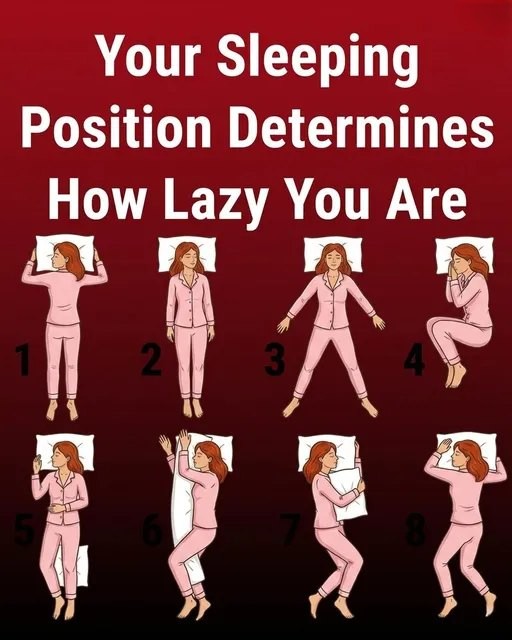
There is a special kind of quiet that settles over the house late at night. The television clicks off, the dishes are done, and the day finally fades away. You climb into bed, fluff your pillow just right, and settle into your favorite sleeping position. But have you ever wondered why you always end up in that same spot? Why do some people curl up tightly while others sprawl out like they own the entire mattress?
Sleep experts and personality researchers have long been fascinated by this question. The way you sleep may quietly reflect who you are when you are awake. It is not a strict science, but millions of people enjoy discovering how their nighttime habits line up with their daytime personalities. As we grow older, these little quirks become even more interesting to explore.
The “Arms Up” Sleeper: The Open-Hearted Free Spirit
If you sleep flat on your back with both arms resting near your head or tucked under your pillow, you are likely an open-hearted free spirit. You approach life with a calm, welcoming energy. People often describe you as a fantastic listener — the friend others turn to when they need honest advice or a comforting shoulder.
This position leaves the front of your body completely open, which mirrors a natural willingness to embrace new experiences. You do not build unnecessary walls. Instead, you face each day with curiosity and warmth. Even if your shoulders feel a little stiff some mornings, your cheerful outlook rarely changes.
The Soldier Position: The Dependable Rock
The soldier sleeper lies completely flat on their back with arms resting straight down by their sides. This structured, disciplined posture often belongs to the rock of the family. You value routine, order, and a well-planned day. You are the one who remembers every birthday, organizes gatherings, and keeps everything running smoothly.
By keeping your limbs close to your body, you project a calm sense of control. Your nighttime stillness reflects how you handle daily responsibilities — with grace and steady focus. Many chiropractors also note that sleeping flat on your back helps maintain good spinal alignment, which is a wonderful bonus as we get older.
The Classic Side Sleeper: The Grounded Realist
A casual side sleeper rests comfortably on one side with arms and legs in a relaxed, natural position. You are not curled into a tight ball, but you are not taking over the entire bed either. This balanced posture often belongs to deeply grounded, practical people.
You navigate life’s ups and downs with a steady hand. You have learned that most things are not worth stressing over. You find a healthy middle ground between working hard and enjoying your downtime. Side sleeping is also excellent for digestion and breathing. Placing a small pillow between your knees can make this position even more comfortable for your hips and lower back.
The Fetal Position: The Cozy Comfort Seeker
The fetal position — lying on your side with knees tucked toward your chest — is one of the most popular sleep styles worldwide. If you sleep this way, you likely have a deep need for emotional comfort and security.
Many fetal sleepers present a strong, capable exterior to the world. You take care of everyone else during the day and handle problems bravely. But deep down, you have a gentle, sensitive soul. Curling up at night is your way of recharging and feeling safe after a long, demanding day. Wrapping yourself in a warm, heavy blanket can make this position feel even more nurturing.
The Starfish: The Generous Free Spirit
Do you spread out across the entire bed with arms and legs pointing in every direction? The starfish sleeper claims their space completely. If you share a bed, your partner might occasionally find themselves gently nudged toward the edge!
Despite taking up room, starfish sleepers are known for being incredibly warm and generous in waking life. You love making others feel welcome. You are deeply giving and always ready to help a friend in need. Your sprawling style simply shows that you are comfortable in your own skin and happy to create space for the people you love.
The Pillow Hugger: The Deep Connector
Some people simply cannot fall asleep without holding something close. The pillow hugger clutches a pillow, bolster, or bundle of blankets tightly against their chest all night long.
This comforting sleep style is strongly linked to a deep need for closeness and emotional connection. If you are a pillow hugger, relationships are at the center of your world. Family, friends, and community bring you the greatest sense of peace. Hugging a pillow also helps keep your shoulders comfortably separated, which can relieve upper body tension.
The Constant Shifter: The Adaptable Problem Solver
Finally, there is the constant shifter — the person who starts on their back, flips to their side, rolls onto their stomach, and ends up somewhere else entirely. While this might feel frustrating when you just want to rest, it often reflects a highly adaptable personality.
You do not panic when things go wrong. Instead, you pivot quickly and find new solutions. Your body’s constant movement mirrors an active mind that is always looking for the most comfortable and effective way forward. You are an intuitive problem solver who listens to what your body needs.
How Sleep Changes as We Grow Older
As we move into our fifties, sixties, and beyond, our relationship with sleep naturally evolves. The sofa that once felt perfectly fine in our twenties might now leave us stiff. We start paying more attention to mattress support, room temperature, and pillows that actually cradle our necks.
Our preferred sleep positions may shift over time. A dedicated stomach sleeper for decades might suddenly find that their lower back prefers the side or soldier position. This evolution is completely normal. It is simply another way we learn to care for ourselves better as the years go by.
The Most Important Thing: How You Feel When You Wake Up
While it is fun to explore what our sleep positions might say about us, the real measure of a good night’s rest is how you feel in the morning. Whether you sleep like a starfish, curl up in the fetal position, or stay perfectly still like a soldier, the goal is the same: waking up refreshed and ready for the day.
Simple habits make a big difference. Keep your bedroom cool, dark, and quiet. Wind down with a warm cup of herbal tea or a good book. Invest in a mattress and pillows that support your body properly. These foundations matter far more than any single sleep position.
The Final Reveal: The way you sleep at night can quietly reveal beautiful truths about your personality. Arms-up sleepers tend to be open-hearted free spirits, soldier sleepers are dependable rocks, side sleepers are grounded realists, fetal sleepers are cozy comfort seekers, starfish sleepers are generous free spirits, pillow huggers are deep connectors, and constant shifters are adaptable problem solvers. Of course, these are just fun reflections — not strict rules. The most important thing is finding the position that lets you rest deeply and wake up feeling your best.
Embracing Your Unique Sleep Style
In the end, our nighttime habits are just another unique piece of who we are. They remind us that even in our quietest hours, our personalities continue to shine through. So the next time you slide under the covers and settle into your favorite spot, take a moment to smile. You are resting exactly the way you are meant to.
May your blankets be cozy, your mind be peaceful, and your sleep be wonderfully deep tonight.
This is a popular personality and wellness topic originally shared and discussed across various internet communities and forums.
Disclaimer: Our website is designed for informational and entertainment purposes only. We are not a real estate company and do not engage in selling, listing, or brokering properties. We operate as a blog, curating and sharing interesting houses we find on various websites across the internet. All decisions related to real estate should be made in consultation with licensed professionals. We do not guarantee the accuracy or timeliness of the information provided. Use our content at your own discretion and risk.