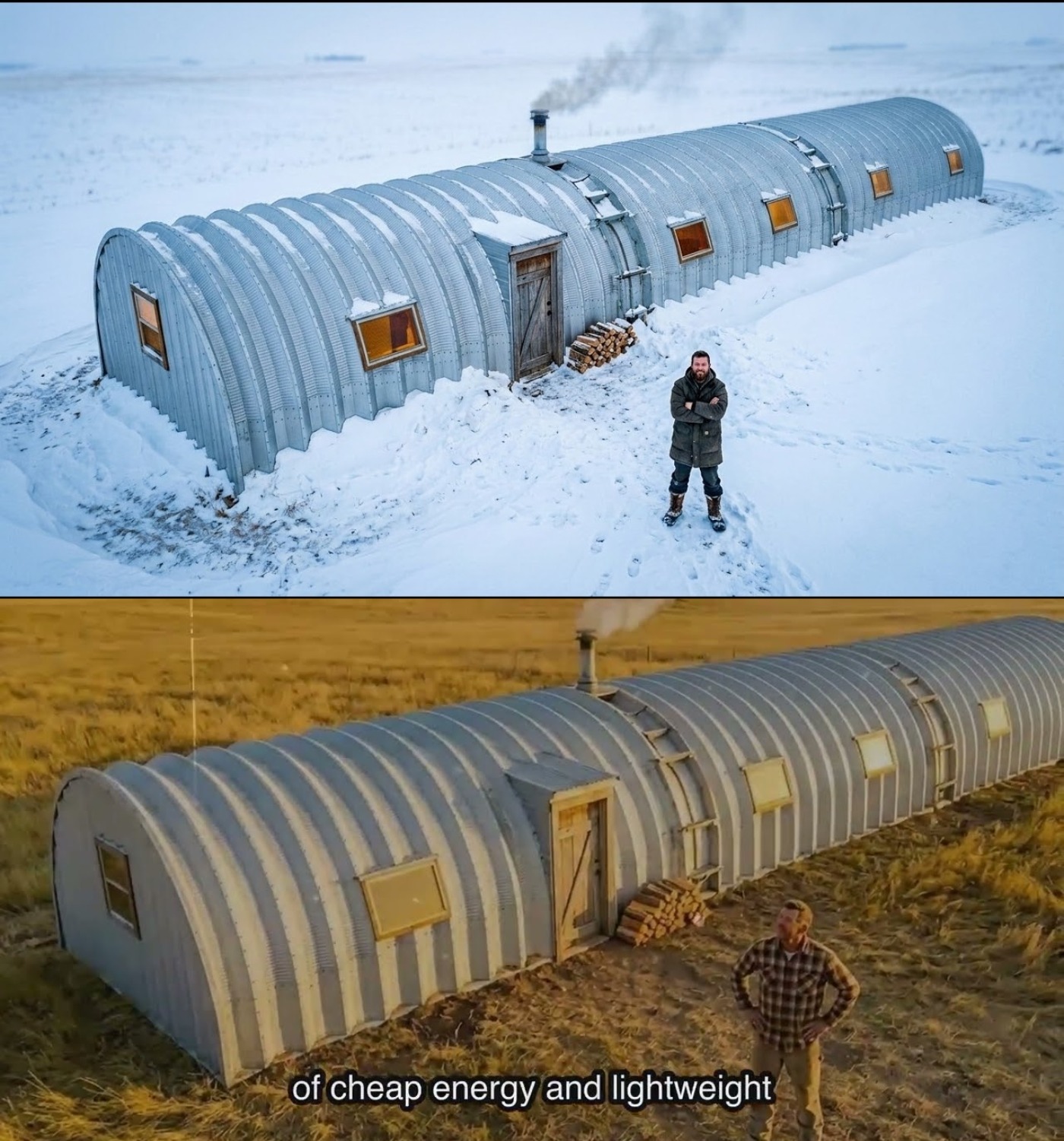
In October 1973, the air inside the Grand Island Lions Club Hall in Hall County, Nebraska, was thick with the comforting aromas of roast beef and coffee. It was the annual harvest supper, a celebration marking the end of a grueling season of farming. Among the attendees sat Harold Nyberg, a retired beet farmer. At 56, he had weathered many seasons, but this one felt different.
Across the table, Clifford Dane, a 48-year-old agricultural lender from First Plains Bank, held court. His confidence was palpable, underlined by the sharp crease in his trousers. Clifford was a man who saw the world through the lens of loans and property values. As the conversation turned to winter preparations, he pulled out a small black toy locomotive, setting it deliberately next to Harold’s half-eaten slice of apple pie.
With a patronizing smile, he pushed the train, making it roll a few inches before it stopped, aimed directly at Harold. “Looks like the depot’s ready for winter, Harold,” he announced, eliciting laughter from the surrounding tables.
To them, Harold’s home—crafted from surplus Navy Quonset huts—was a joke. It was a testament to extreme thrift that the town had decided was completely absurd. But Harold remained unfazed. He simply nodded and took another bite of pie. While the laughter echoed around him, he knew that validation would come. It would just take six brutal winters to prove his point.
The Problem with the “Modern” Farmhouse
Harold was not an engineer or an architect; he was a farmer. He was a man who understood the land, soil density, and root depth. He had learned the hard way about the massive inefficiencies of traditional homes during his first winter in a drafty farmhouse with his wife, Lena. They had struggled to keep warm, endlessly battling the bitter cold that seeped right through the thin walls and single-pane windows.
By 1957, after raising two children in that failing farmhouse, Harold sought a permanent solution. He didn’t want to go into massive debt for a conventional house, so he turned to his brother Edwin, who worked at the Great Western Sugar Refinery. Edwin often complained about the mountains of beet lime, an industrial waste product that just so happened to be incredibly dense and capable of holding heat.
Harold had an idea.
Building the “Train Depot”
Inspired by function over form, Harold purchased three surplus military Quonset huts, envisioning a home that would physically retain warmth rather than just block the wind.
He dug incredibly deep for the foundation, laying a massive, oversized slab of concrete mixed heavily with the industrial beet lime. This wasn’t just a floor; it was a giant thermal battery designed to store heat and slowly release it over time.
As he constructed his home, bolting the metal structures end-to-end, neighbors watched in confusion. “Why not just build a proper house?” they would ask, shaking their heads. But Harold was undeterred. He was designing a home that would harness thermal mass—a concept completely overlooked in an age where cheap energy was taken for granted.
The Blizzard of ’79: The Ultimate Test
The winter of 1979 proved to be a harsh, unforgiving teacher. A massive blizzard blanketed Hall County, followed immediately by an Arctic air mass that plunged temperatures to life-threatening lows. Power lines snapped. Roads were impassable.
While families in the newer, expensive subdivisions struggled to keep warm as their modern heating systems failed, Harold’s Quonset hut thrived.
Inside, the temperature remained remarkably stable. His single wood stove radiated warmth, and the massive concrete slab beneath held the heat like a giant cast-iron skillet.
When neighbors—including Walt Jensen, a man who had often laughed at Harold’s unconventional “train depot”—found themselves freezing in the dark in their modern homes, desperation set in. They braved the blinding snow and made their way to Harold’s property.
The Cliffhanger’s Payoff
Walt knocked on the freezing corrugated metal door, shivering uncontrollably. When Harold opened it, Walt braced himself for a blast of hot, suffocating air from an overworked furnace.
Instead, he was enveloped by a profound, even comfort. The warmth was not a forced blast of air, but a gentle, pervasive heat that radiated entirely from the floor up.
That night, families huddled together in Harold’s Quonset hut, experiencing a warmth that defied the icy grip of the deadly winter outside. Harold quietly kept the stove fed, and Lena brewed coffee, creating an atmosphere of total safety. He welcomed them all, never once boasting about his foresight or mentioning the years of ridicule he had faced at the diner. He simply provided a haven.
The Legacy of the Quonset Genius
As the storm passed and life returned to normal, the story of Harold’s harbor spread throughout the Nebraska prairie.
Years later, Marla Hoyer, a county extension agent, heard the local folklore about Harold’s home. Armed with skepticism and a clipboard, she visited Harold, only to be completely astonished by the temperature data he had meticulously recorded over the years.
Her formal analysis confirmed what Harold had known all along: his “joke” of a home was nearly 80% more efficient than conventional houses built in the same decade. This revelation sparked intense interest in sustainable, thermal-mass building practices, completely shifting how resilient homes were designed in the region.
As for Clifford Dane, the banker with the toy train, he lived to witness the transformation of the housing market and the steep decline of the poorly insulated dream homes he had financed. The realization that Harold had built a true home—and not just an oversized metal tube—weighed heavily on him.
Harold Nyberg proved that true resilience isn’t about impressing the neighbors. It’s about building something strong enough to weather the absolute worst the world can throw at you.
Disclaimer: Our website is designed for informational and entertainment purposes only. We are not a real estate company and do not engage in selling, listing, or brokering properties. We operate as a blog, curating and sharing interesting houses we find on various websites across the internet. All decisions related to real estate should be made in consultation with licensed professionals. We do not guarantee the accuracy or timeliness of the information provided. Use our content at your own discretion and risk.