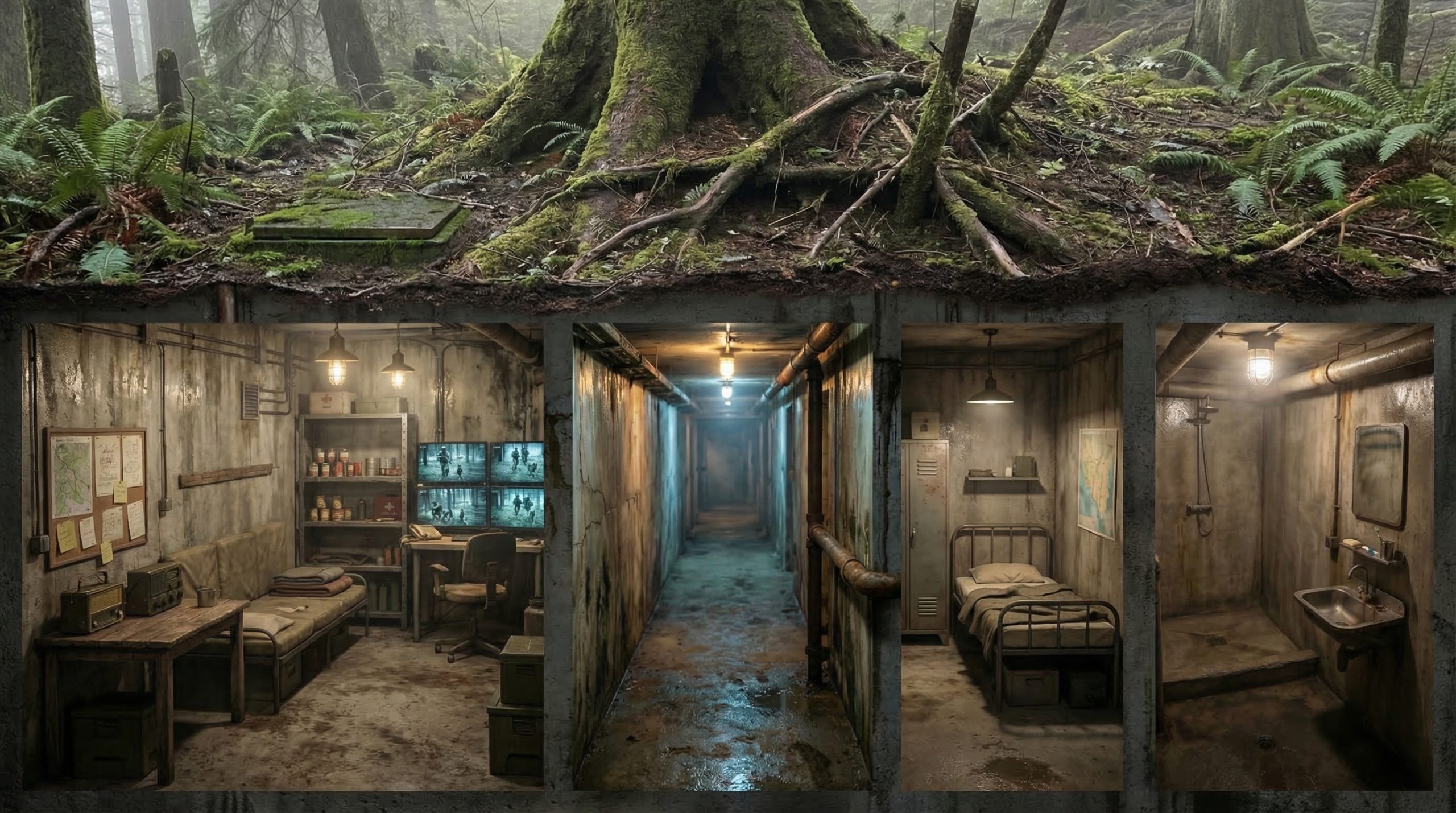
Hidden Forest Bunker Built Beneath a Camouflaged Tree Entrance
A hidden forest bunker is one of those ideas that instantly grabs attention. At first glance, the site looks like an ordinary patch of damp woodland. There is a huge tree, exposed roots, moss, mud, and scattered branches on the ground. Nothing about it seems unusual. However, beneath that natural forest floor sits a concealed underground shelter designed to stay out of sight.
What makes this bunker concept interesting is not only the underground space itself, but also the way the entrance disappears into the landscape. Instead of using a visible door or a traditional hatch, the entrance is disguised as part of the forest floor near the base of a large tree. Moss, roots, leaves, soil, and natural debris help the hatch blend in with the surroundings. As a result, it looks like untouched terrain when closed.
A Camouflaged Bunker Entrance That Looks Natural
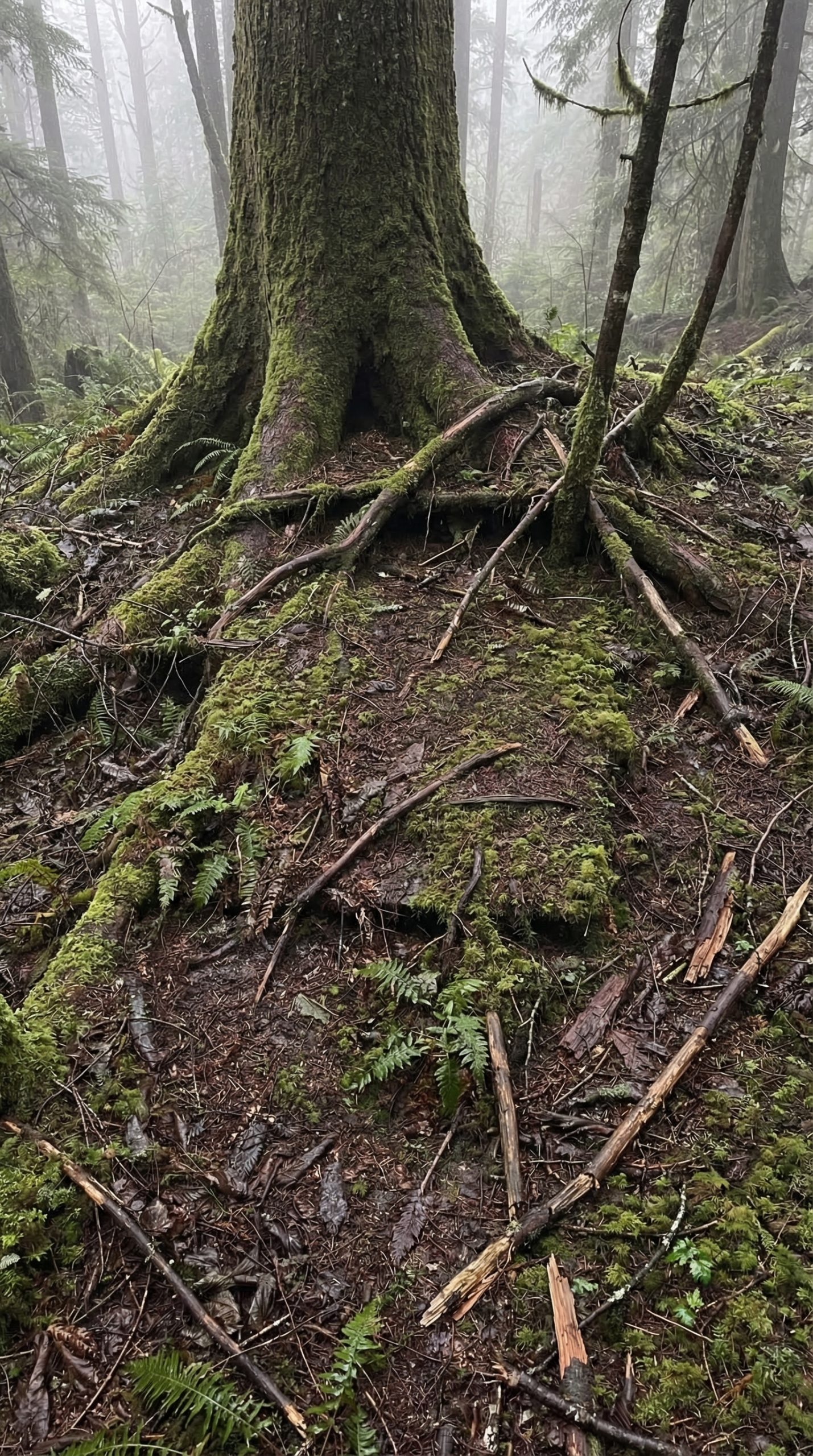
The most striking feature of this hidden forest bunker is the entrance. In this concept, the hatch is built directly into the ground beside a large moss-covered tree. The goal is simple: make the bunker almost impossible to notice from above.
When the hatch is closed, it looks like a normal part of the forest. The top layer is covered with real-looking soil, wet leaves, moss, and low plants. Tree roots stretch across the surface, which makes the camouflage even more believable. Because of that, the bunker entrance does not read as a man-made structure at first glance.
Once opened, the disguised hatch lifts upward and reveals a concrete stairway going down into the earth. Warm light from below creates a sharp contrast with the cool, foggy forest outside. This contrast is one reason why the bunker visuals are so effective. The outside feels cold, damp, and exposed. Meanwhile, the inside feels secure, enclosed, and functional.
The Concrete Stairway and First Impression Underground
After the hatch opens, a narrow reinforced stairwell leads into the bunker. The walls are concrete, not decorative. Water stains, dirt, and damp textures make the structure feel grounded and believable. This is important because a realistic bunker should not look polished or futuristic. It should feel strong, used, and practical.
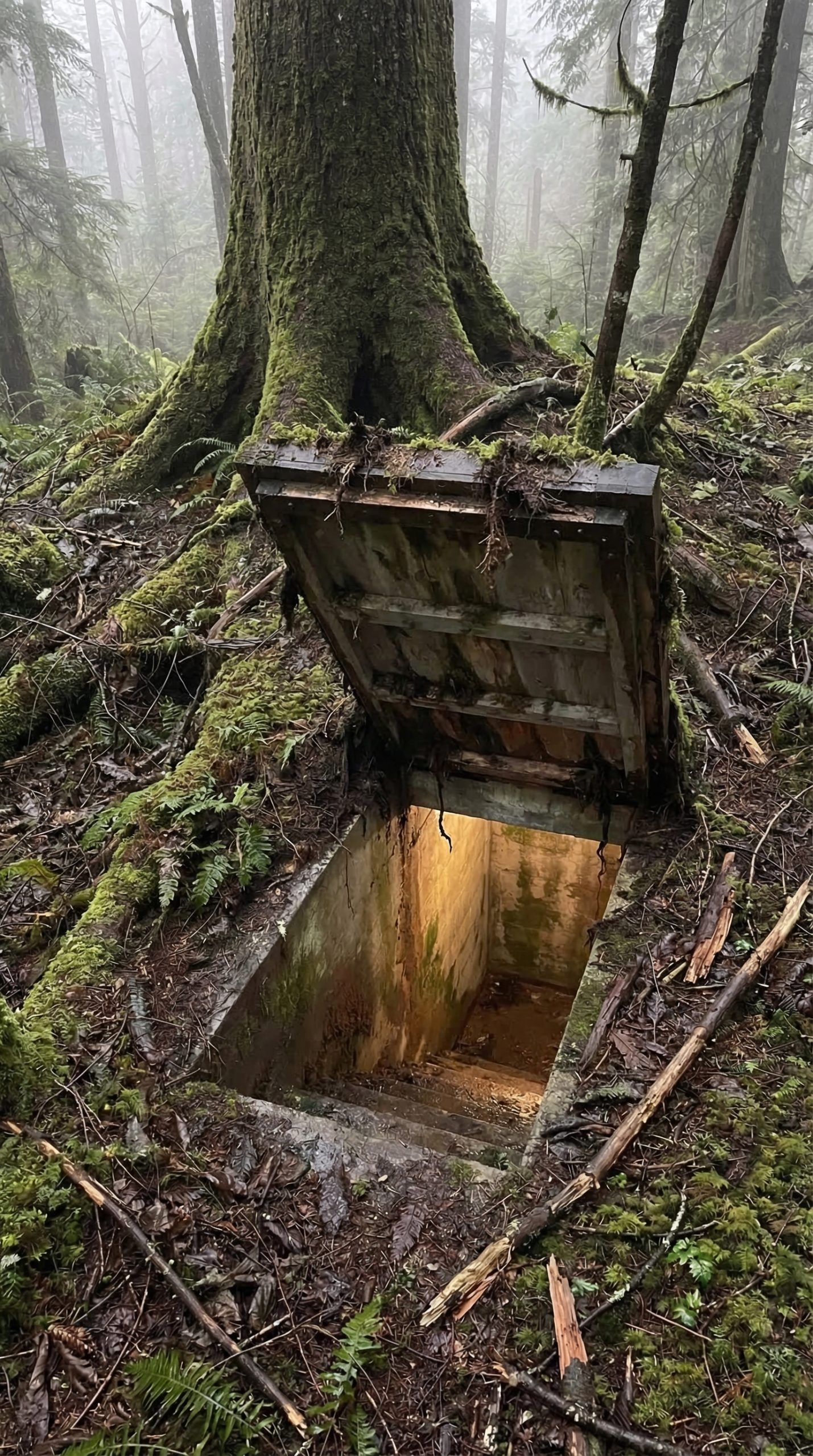
The stairway acts as a transition space between two worlds. Above ground, there is a quiet forest covered in mist and roots. Below ground, there is a hidden survival space built for privacy, security, and long stays underground. That contrast gives the bunker a stronger story.
In this design, the entry does not feel luxurious. Instead, it feels engineered for survival. The stairs are steep, the concrete is worn, and the lighting is practical. Even so, that roughness is part of what makes the concept work so well.
Inside the Bunker Control Room
One of the most interesting rooms in this hidden forest bunker is the control room. This space is the nerve center of the shelter. It is where the occupant monitors the outside world without leaving the bunker.
The control room is built with stained concrete walls, exposed pipes, industrial lights, and a rugged workstation. Multiple monitors display CCTV-style camera feeds from the forest above. These screens show search activity outside, including armed soldiers and tracking dogs moving through the trees. That detail adds tension to the bunker concept and gives the room a real purpose.

Instead of being clean and futuristic, the control room feels damp and worn. Moisture marks run down the walls. Cables and pipes sit exposed along the ceiling. Warm overhead lights mix with the cool glow of the surveillance screens. Because of that, the room feels like an older bunker that has been upgraded over time rather than a sci-fi control center.
This is also where the bunker becomes more than a hidden room underground. It starts to feel like a complete system. Surveillance, power, lighting, and communication all come together here.
Bedroom, Living Room, and Bathroom
A bunker cannot rely only on secrecy. It also needs to be livable. In this concept, the underground layout includes a bedroom, a small living area, and a bathroom. These spaces are simple, but they make the bunker more realistic.
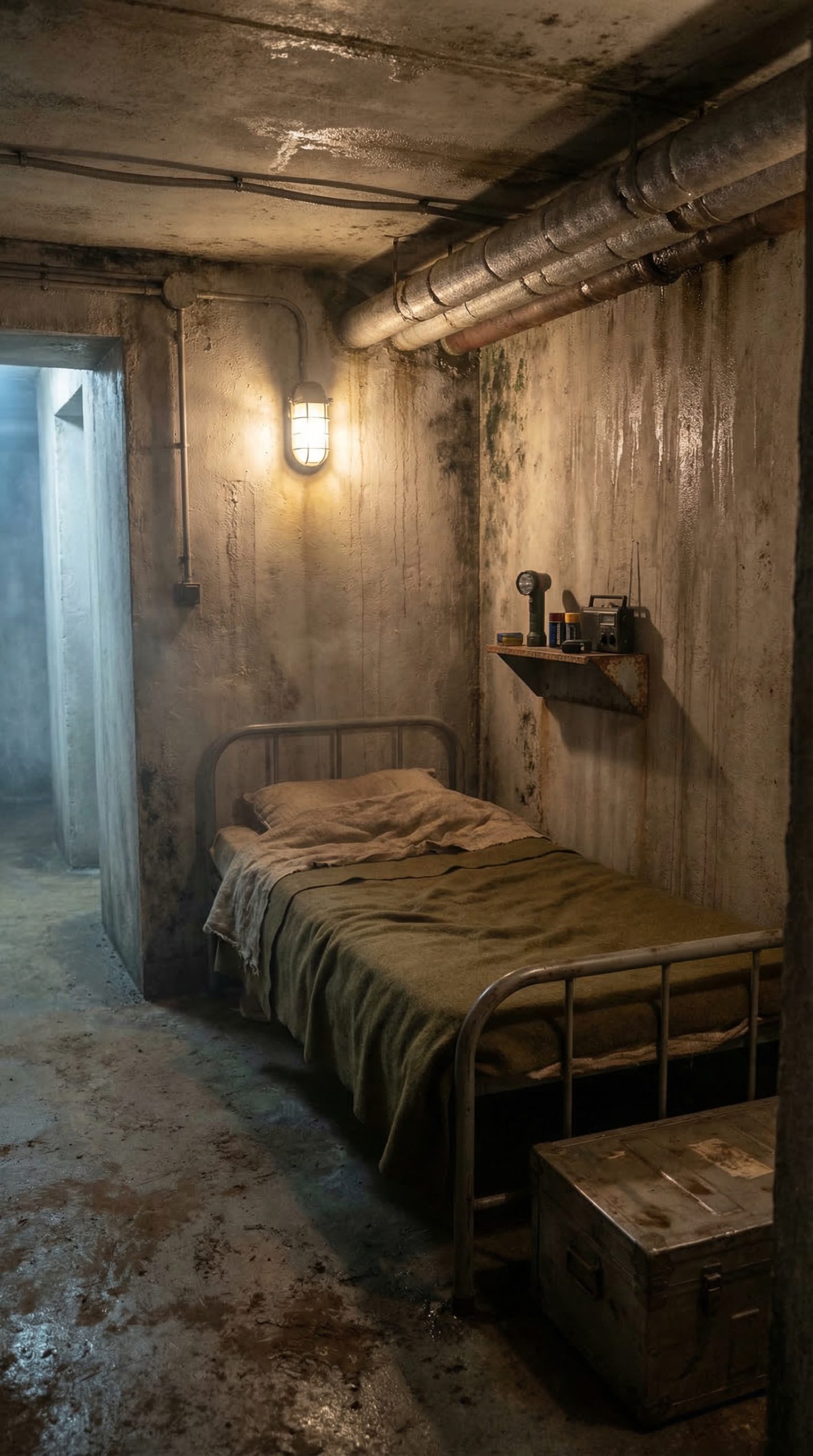
The bedroom is compact and practical. It includes a single metal bed, worn bedding, a small shelf, and basic storage. The walls are damp concrete with visible age and moisture stains. A warm industrial wall light gives the room enough light to feel usable without making it feel comfortable in a luxury sense. It still looks like part of the same underground system.
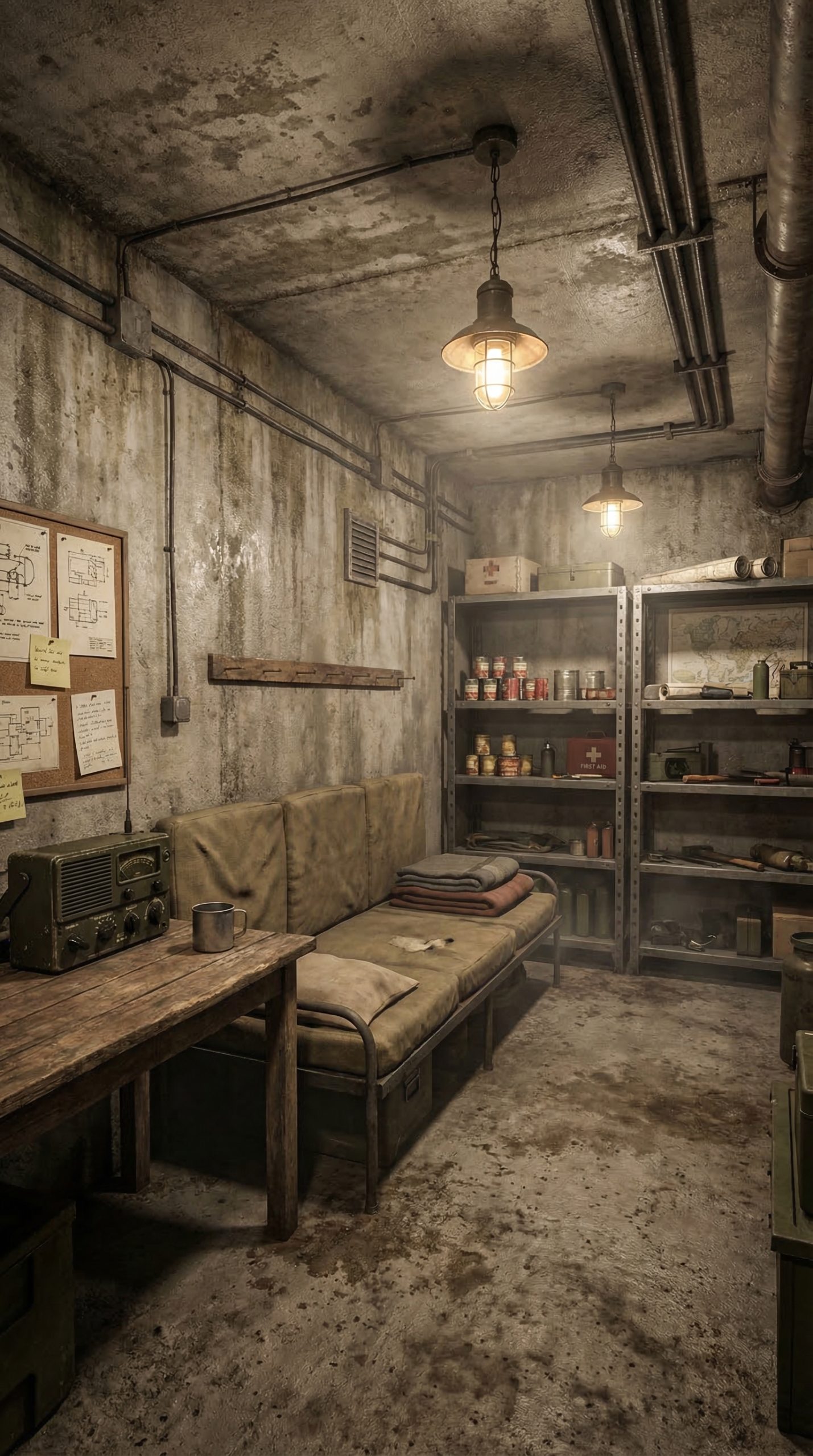
The living room continues that same visual language. There is a worn couch, a basic table, radio equipment, and metal shelves holding supplies. This area feels like a place where someone could sit, plan, listen, and wait. It is not oversized, and it is not styled like a normal house. Still, it makes the bunker feel more complete and more believable for longer stays.
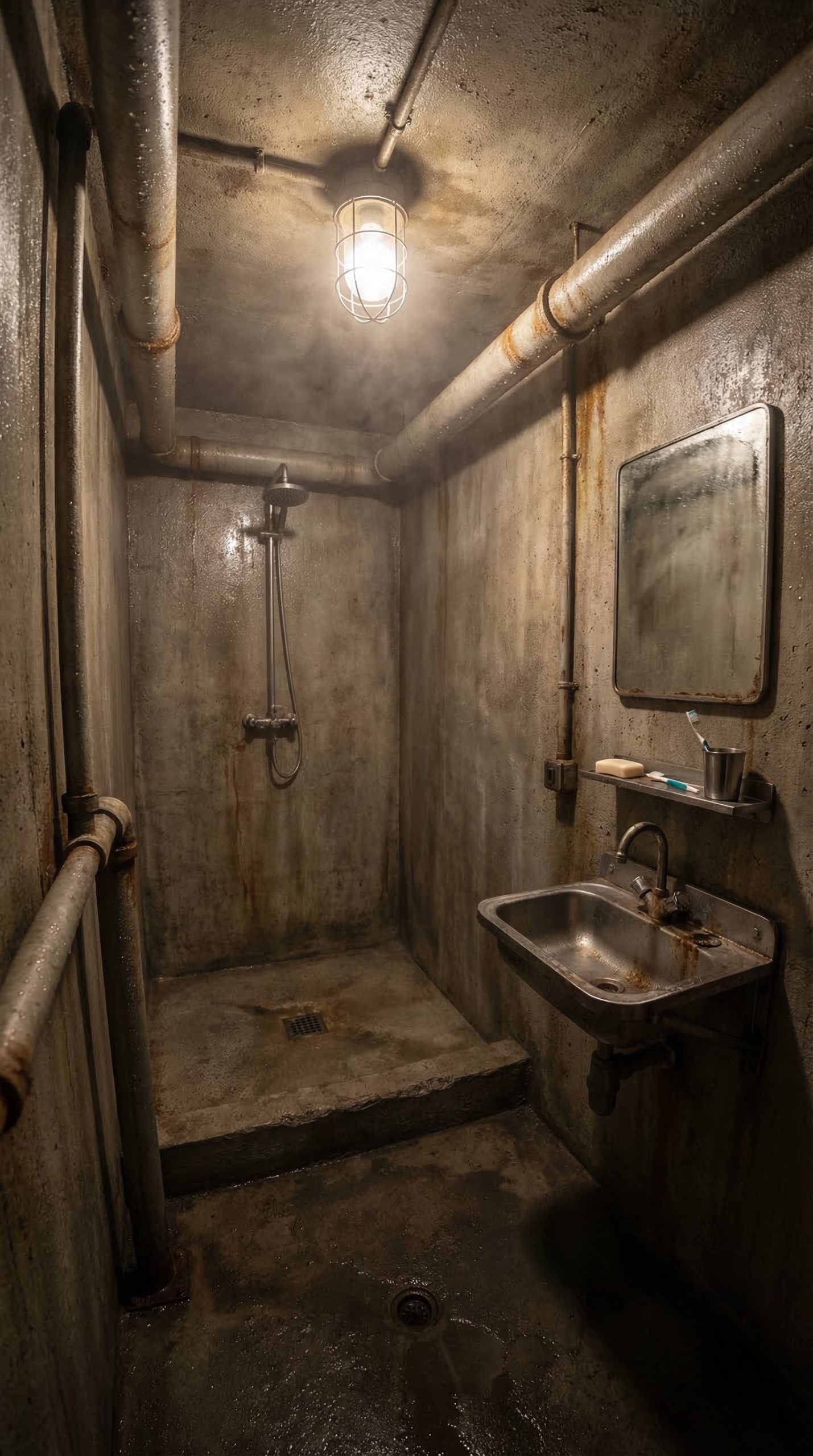
The bathroom is just as raw. It includes a concrete shower area, a small metal sink, exposed plumbing, drainage in the floor, and heavy moisture on the walls. Again, the design stays practical. Hygiene matters in any survival space, so even a small bathroom makes a big difference in how usable the bunker would be.
A Coherent Underground Layout
What helps this hidden forest bunker stand out is that the rooms feel connected. The bunker is not presented as random cool images. It works more like a compact underground layout with a clear logic.
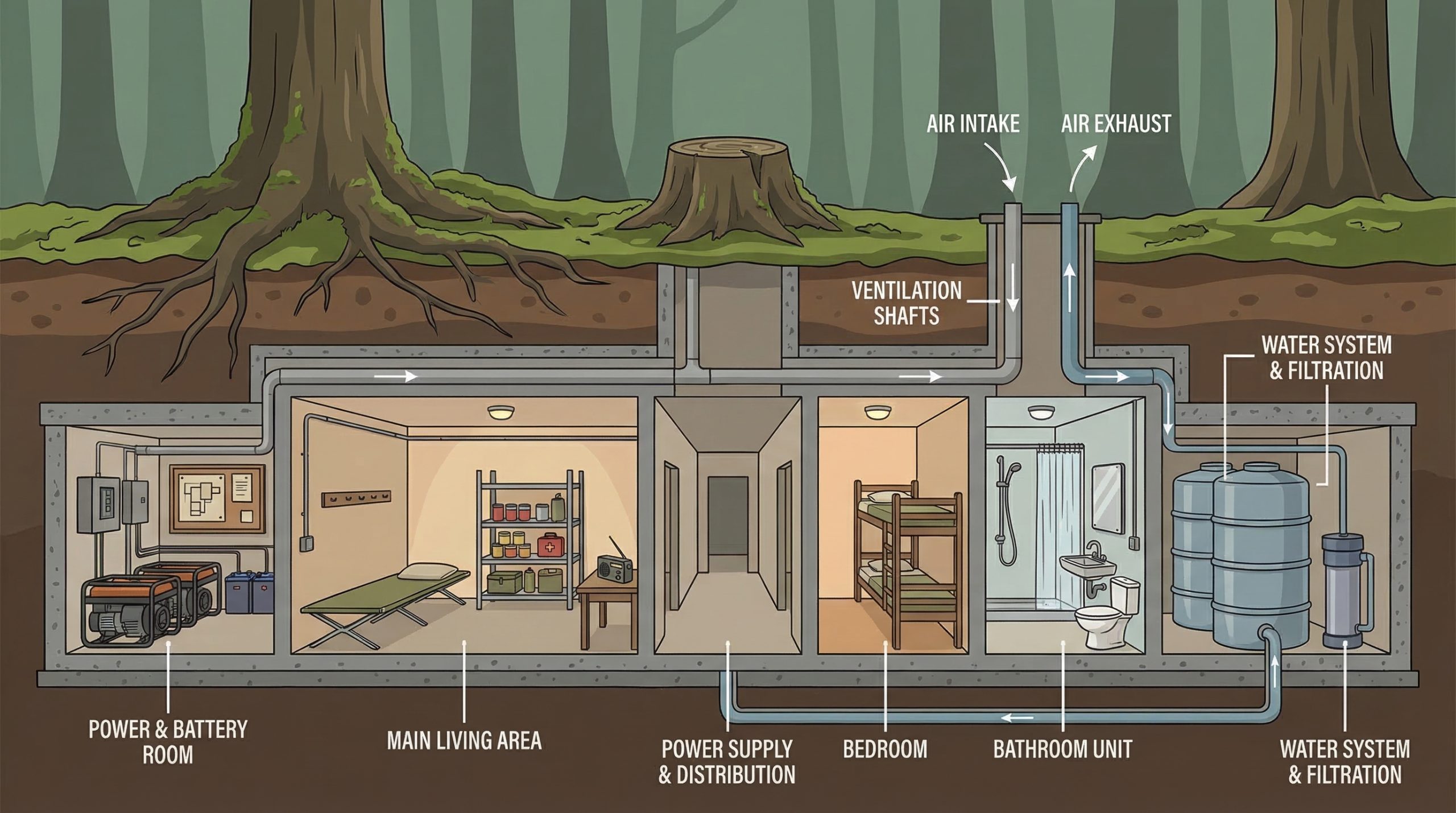
The control room connects to a narrow bunker hallway. That hallway links the bedroom, living room, and bathroom. All rooms share the same materials, colors, and atmosphere. The ceilings stay low. The concrete remains damp and stained. The lighting stays industrial and warm. Therefore, the whole shelter feels like one believable space instead of several unrelated scenes.
That consistency matters. Many bunker concepts fail because the rooms look like they belong to different worlds. Here, the bunker keeps the same mood throughout. It is hidden, functional, and slightly claustrophobic, but still organized enough for survival.
Why This Hidden Forest Bunker Concept Works
This bunker concept works because it combines camouflage, realism, and strong visual storytelling. The hidden hatch is the hook. The stairway adds mystery. Then the underground rooms show how the shelter could actually function.
Moreover, the design does not lean too hard into fantasy. It avoids glowing sci-fi panels, oversized luxury rooms, and unrealistic finishes. Instead, it sticks to concrete, metal, pipes, storage, lights, and moisture. That grounded approach makes the idea more convincing.
The forest setting also helps. A large tree with exposed roots already creates a dramatic visual above ground. When that same area hides a bunker hatch, the contrast becomes even stronger. It feels like nature and engineering are layered on top of each other.
Final Thoughts on This Camouflaged Underground Shelter
This hidden forest bunker is a strong example of how a survival shelter can be designed to stay visually hidden while still providing useful underground space. The camouflaged hatch, reinforced stairway, control room, bedroom, living room, and bathroom all support the same idea: secrecy with function.
Even though this is a fictional concept, it feels believable because the details stay consistent from start to finish. The forest above is wet, cold, and organic. The bunker below is damp, enclosed, and practical. Together, they create a hidden underground world that feels surprisingly complete.
For readers who enjoy bunker design, survival concepts, hidden architecture, or unusual underground spaces, this kind of camouflaged forest shelter is easy to remember. It is simple, visual, and built around one strong idea: what looks like ordinary ground can hide an entire world below.
This article and the visuals connected to it were created with the help of AI for creative and entertainment purposes. The bunker concept described here is fictional and should not be taken as real construction, engineering, or safety advice.
Disclaimer: Our website is designed for informational and entertainment purposes only. We are not a real estate company and do not engage in selling, listing, or brokering properties. We operate as a blog, curating and sharing interesting houses we find on various websites across the internet. All decisions related to real estate should be made in consultation with licensed professionals. We do not guarantee the accuracy or timeliness of the information provided. Use our content at your own discretion and risk.