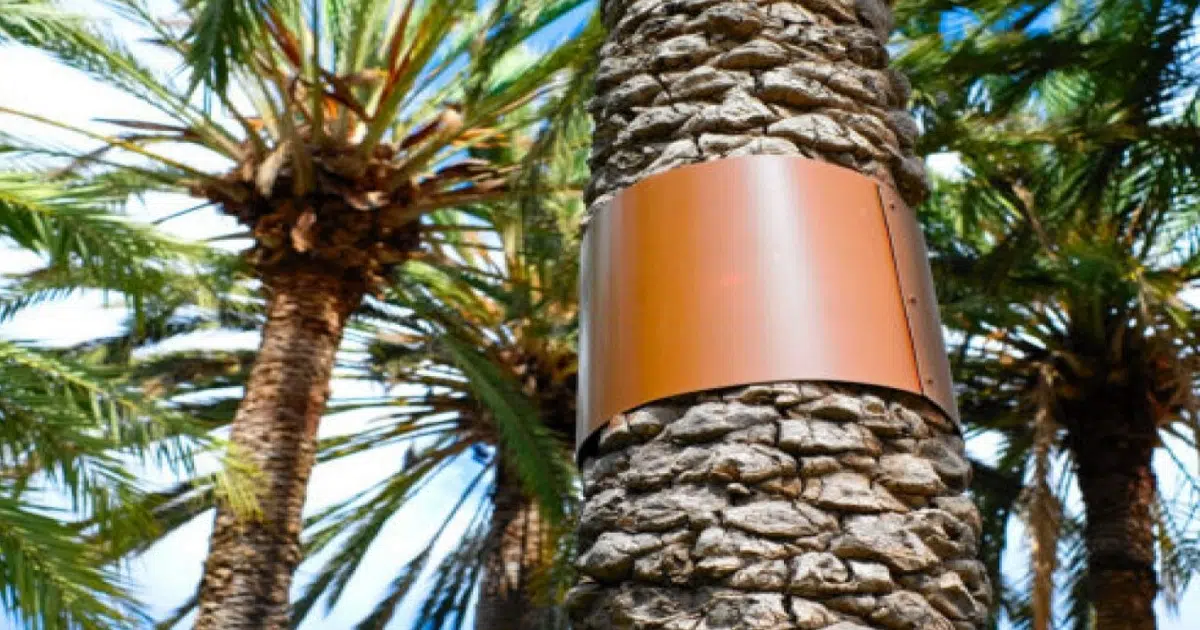
Have you ever been out for a casual walk when something suddenly catches your eye? There’s a perfectly healthy-looking tree with a shiny metal band or cone wrapped around its trunk. It looks a bit odd at first — like the tree got into a minor accident and needed protection. I definitely did a double-take the first time I saw one.
I used to think it was some kind of tree surgery or support brace. Turns out, it’s actually a clever piece of “tree armor” called a tree baffle. Once you know what they are, you start spotting them everywhere. And they’re way more interesting than they look.
So, What Are Tree Baffles?
Tree baffles are smooth metal wraps or cones placed around tree trunks to stop climbing pests. They’re not for fixing damage — they’re for prevention. Squirrels, raccoons, rats, and other critters love using trees as highways to get onto roofs, into attics, or feast on bird feeders and fruit.
By creating a slippery barrier, these baffles use simple physics to keep unwanted guests from climbing higher. No fancy gadgets needed — just good old smooth metal that paws and claws can’t grip.
Why Trees Need This Protection
Squirrels might be cute, but they can cause real headaches. They strip bark, build messy nests, chew through wires, and turn your attic into their personal playground. I’ve had squirrels in the attic before — definitely not something I want to repeat.
Fruit trees, bird feeders, and trees near houses are especially popular targets. A baffle protects the tree itself from damage while keeping pests from using it as a launchpad to your roof or garden. Arborists and homeowners have been using them for years because they work without harming the tree.
Bands vs Cones: Which One Do You Need?
There are two main types of tree baffles, and each has its sweet spot:
Metal Bands are wide, flat strips that wrap around the trunk like a belt. They’re perfect for mature, thicker trees such as oaks or maples. You install them at least 5–6 feet off the ground (so squirrels can’t jump over them) with a slight overlap. Secure with wire, screws, or nails — carefully so you don’t hurt the tree.
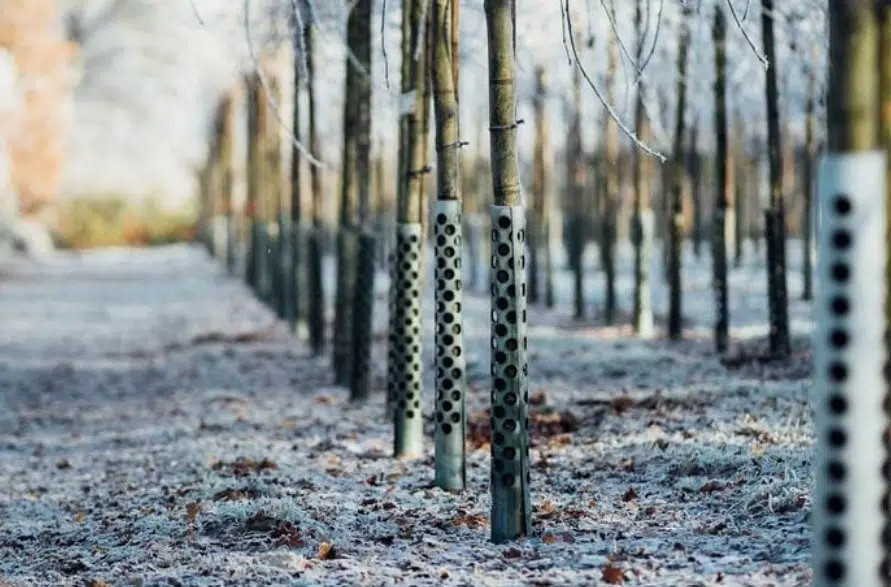
Cones flare out like an upside-down collar and work great on younger or thinner trees, including fruit trees. They create a wider slippery surface that’s extra hard for critters to get past.
Both styles are effective. Many people even paint them to blend in with the bark or match the surroundings so they don’t stand out as much.
How Tree Baffles Actually Work
The magic is all in the slick surface. Squirrels and raccoons rely on their claws for grip. On smooth metal, they slide right back down — like trying to climb a greased pole at a county fair. It’s surprisingly satisfying to watch (from a distance).
Once the baffle is properly installed, pests can’t reach the upper branches, nests, or your roof. It breaks their travel route without any traps, poisons, or harm to the animals. Just smart, humane prevention.
Can You Make Your Own Tree Baffle?
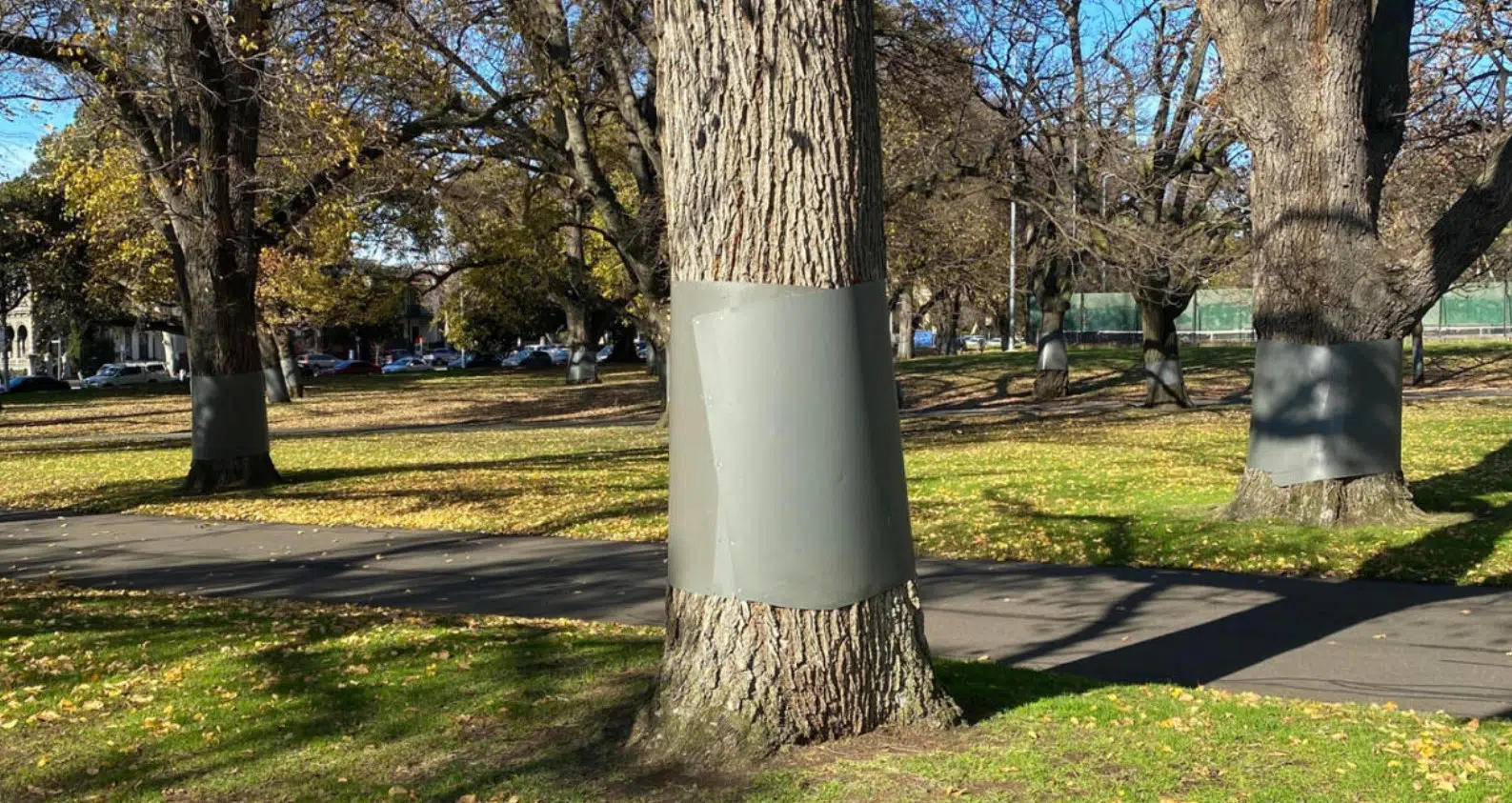
Absolutely! DIY baffles are popular and budget-friendly. Grab a sheet of aluminum or smooth metal flashing (about 18–24 inches wide). Wrap it snugly around the trunk with a good overlap, then secure it. Keep the bottom edge at least five feet up so determined squirrels can’t use lower branches as a stepping stone.
Pro tips from folks who’ve done it:
– Overlap the seam well so there are no edges to grab.
– Check it every year as the tree grows.
– Paint it with outdoor paint if you want it to disappear into the landscape.
– One friend made his look like tree bark, while another left it shiny — now his tree doubles as a garden disco ball on sunny days.
Other Tree Mysteries You Might Spot
Once you start noticing baffles, you’ll see other clever tree protections too — hanging bottles, painted marks, or wraps of different materials. Trees have their own quiet language once you learn to read it.
These simple solutions show how people have been solving backyard problems for generations using basic tools and a little creativity.
Should You Add a Baffle to Your Trees?
If you have squirrels raiding your bird feeders, raccoons on your roof, or young fruit trees getting stripped, a baffle might be the low-maintenance answer you’ve been looking for. They’re affordable, effective, and last for years with minimal upkeep.
Next time you’re out walking and spot that shiny metal on a tree, you’ll know exactly what’s going on. It’s not a tree in trouble — it’s a tree that’s well-protected and living its best life.
Have you ever noticed tree baffles in your neighborhood? Or dealt with squirrel drama in your yard? Drop your stories in the comments — I love hearing how other folks handle these fuzzy little troublemakers!
Disclaimer: Our website is designed for informational and entertainment purposes only. We are not a real estate company and do not engage in selling, listing, or brokering properties. We operate as a blog, curating and sharing interesting houses we find on various websites across the internet. All decisions related to real estate should be made in consultation with licensed professionals. We do not guarantee the accuracy or timeliness of the information provided. Use our content at your own discretion and risk.